
Emerald
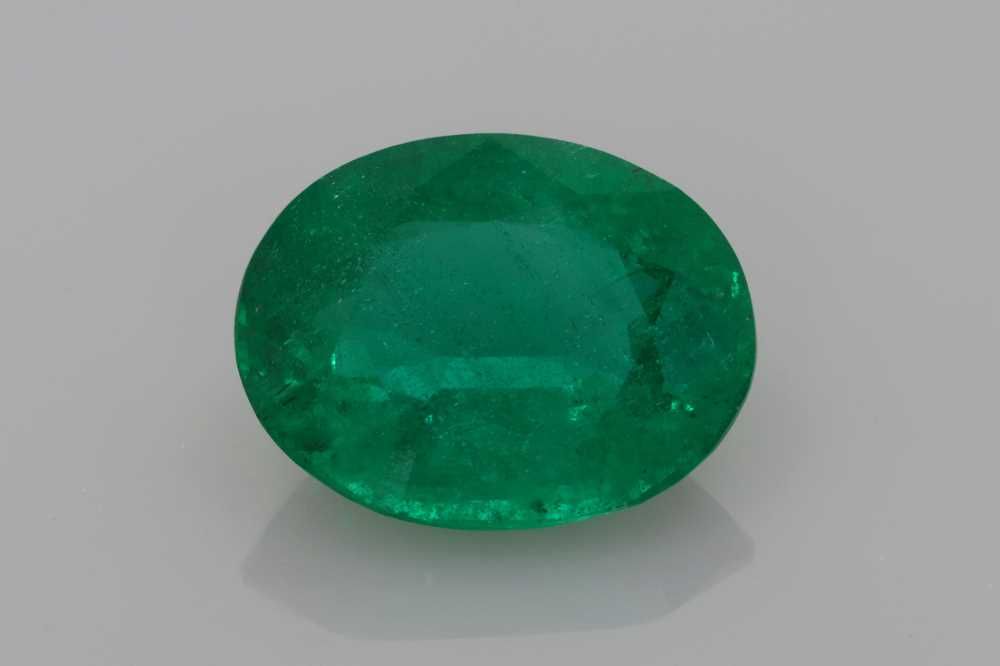
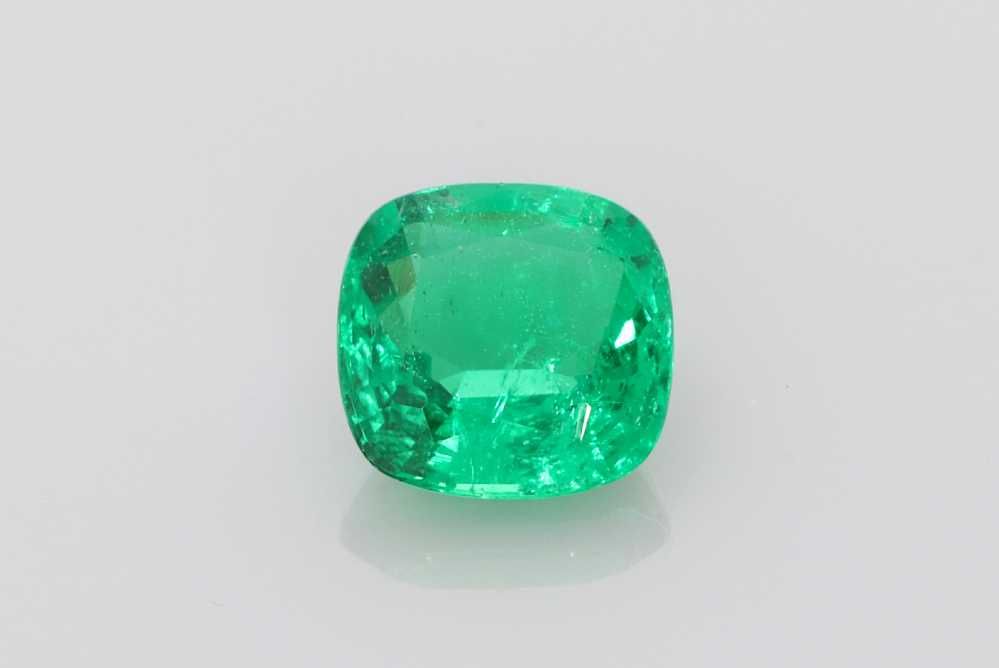
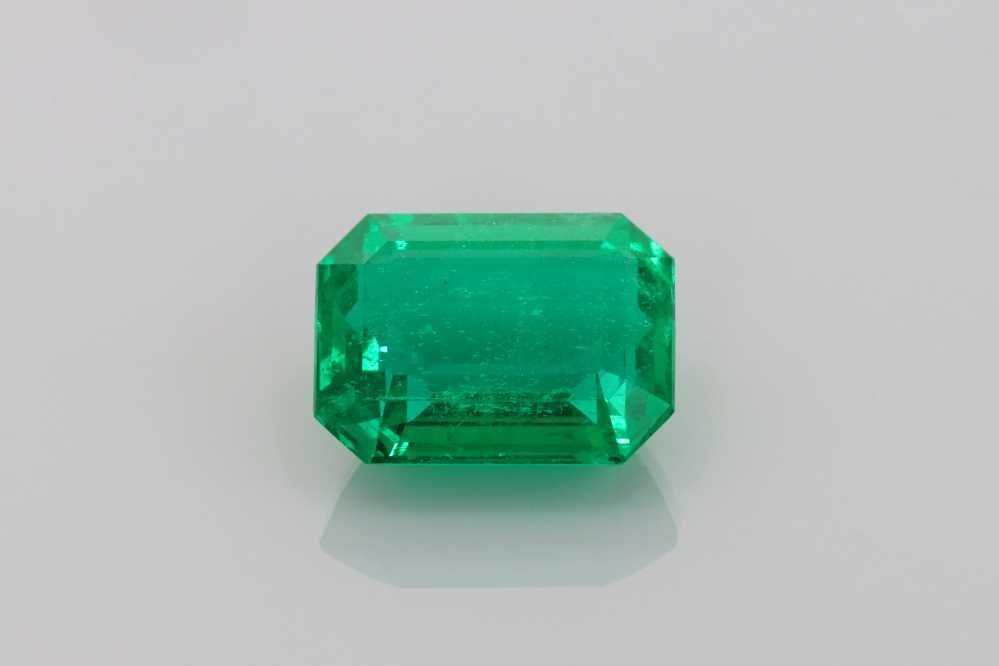
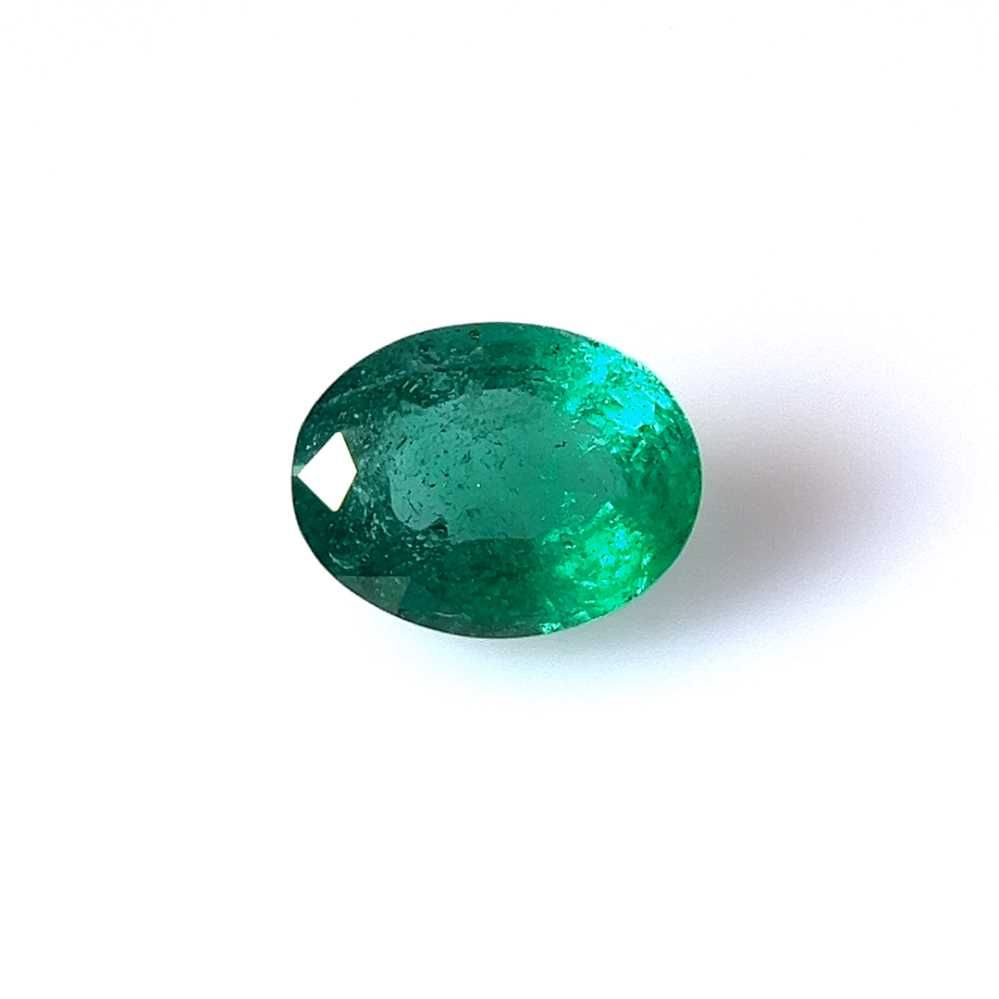
Emerald is the green variety of beryl, the same mineral family as aquamarine and morganite. Color comes from chromium (the good kind) or vanadium (a lesser kind, mostly Colombian and Brazilian). Of the “big four” precious stones — diamond, sapphire, ruby, emerald — emerald is the most fragile and the most personality-driven.
- 1
- 2
- 3
- 4
- 5
- 6
- 7
- 8
- 9
- 10
Everyday wear comfortably wants a 7+. Below 7, choose settings that protect the stone (bezel, halo) and store the piece carefully.
It’s hard enough to wear, but it carries internal stress fractures called “jardin” (French for garden) — the inclusions that make an emerald an emerald. Almost no untreated emerald is eye-clean. Buy clarity expectations accordingly.
Color
The trade describes emerald color with three axes:
- Hue — pure green is the ideal; bluish-green is acceptable; yellowish-green is the lower tier.
- Tone — medium-dark is prized. Too light and the stone reads pale; too dark and it goes inky.
- Saturation — “vivid” is the top grade; “intense” is the everyday standard.
Treatments
This is where buying emerald gets serious. Almost every commercial-grade emerald is treated with cedar oil or a synthetic resin to fill surface- reaching fractures and improve clarity. The trade accepts oil; it’s been standard for centuries.
| Status | What it means | Price impact | |
|---|---|---|---|
| No oil | Untreated — extremely rare | Stone has no fillers; surface fractures (if any) are visible | +50–100 % over equivalent oiled stones |
| Minor / insignificant oil | Small amount of oil in surface-reaching cracks | Stone reads cleaner than its true clarity | +10–20 % over moderate oil |
| Moderate oil | Default for fine emerald | Most fractures filled; stone reads at advertised clarity | The trade baseline |
| Heavy oil / resin | Significant filler | Stone would look worse without it | Discounted — be skeptical |
Origin
Origin moves emerald price more than any other variable except size.
- Colombia — the original source since Spanish colonial times. Muzo and Chivor mines produce the bluest-greens with classic inclusions. Premium pricing for cultural pedigree.
- Zambia — a more recent producer, but crystals tend to be cleaner and slightly bluer-cool. Excellent value at the mid-market.
- Brazil — wide range; the Belmont mine produces gem-quality comparable to Colombian.
- Ethiopia — newer find (mid-2010s), producing rich color at competitive prices. The trade is still settling on positioning.
Origin reports from a respected lab (Gübelin, SSEF) are the gold standard for high-end stones. For mid-market emeralds, an AGL or GRS report suffices.
Buying
A working buyer checks three things:
- The face-up color in daylight. Indoor showroom lighting is flattering. Take the stone (or photos of the stone) outside.
- Oil disclosure on the report. “Moderate” is the trade standard; anything heavier and you’re paying for the oil, not the stone.
- The setting. Emerald’s vulnerability means bezel or partial-halo settings are wiser than four-prong solitaires.
The beryl family
Emerald is the green member of beryl, the mineral family it shares with aquamarine (blue, colored by iron) and morganite (pink-peach, colored by manganese). Same crystal structure, same Mohs ~7.5–8 — but emerald is the outlier: chromium gives it both its color and its trademark inclusions, so where aquamarine and morganite grow large and clean, emerald grows fractured and is the high-maintenance one of the three.
Shop emerald pieces
Frequently asked
More from the gemstones guides
Written by
Anna
Jeweler · Formi Jewelry
Anna works with Formi clients on stone selection, setting design, and fit — making sure every piece is right before it’s made.
Book a consultation with our in-house jewelersLast updated May 2026