The four Cs
GIA codified the four Cs in the 1940s as a shorthand for grading a diamond’s quality. They are still the standard sixty years later because they hold up: cut, color, clarity, carat. The order matters — cut affects how the stone reads more than the other three combined, but carat is what most buyers anchor on first.
Here’s the working gemologist’s spend ranking, in order of how much each C affects what the customer actually sees:
- Cut — by a wide margin
- Color in colorless stones (D–J); carat in fancy shapes
- Clarity only down to the eye-clean threshold (VS2 for most shapes, VS1 for step cuts)
- Carat as a tiebreaker, not a starting point
Cut
The only C that’s entirely the work of a human (and the rough). Cut controls how light enters the stone, bounces off the facets, and exits through the table — what we read as “sparkle.” A poorly cut 1.0 ct diamond looks smaller and duller than a well-cut 0.85 ct.
GIA grades cut from Excellent down to Poor. Buy Excellent or Very Good for round brilliants. For fancy shapes (oval, marquise, pear, cushion, princess) GIA reports symmetry and polish but doesn’t issue an overall cut grade — you have to read the proportions yourself or trust the seller.
Color
For colorless diamonds, GIA grades color D (perfectly colorless) through Z (light yellow). The visible difference between adjacent grades is nearly impossible to spot with the naked eye. The bands the trade recognizes are:
| Grade | Description | In practice | |
|---|---|---|---|
| D–F | Colorless | No visible color | Premium pricing. Indistinguishable from each other except under master stones in a controlled grading environment. |
| G–J | Near-colorless | Faint warmth, hard to see face-up | The sweet spot for value. G or H face-up in a yellow-gold or rose-gold setting reads identical to D–F. |
| K–M | Faint yellow | Slight warmth visible | A judgment call. In rose or yellow gold, K can look perfectly fine; in platinum, it reads warmer than most buyers want. |
| N–Z | Very light to light yellow | Color clearly visible | Rarely seen in fine jewelry. If a stone in this range is on the table, it should be priced as a fancy yellow, not a white stone. |
Once you cross into vivid fancy colors (yellow, pink, blue), a different scale (Fancy Light → Fancy Vivid) applies and prices behave entirely differently — fancy vivid pink and blue are some of the most expensive gemstones on earth.
Clarity
The grading of internal characteristics. GIA’s scale runs from Flawless down through I3.
| Grade | What it means | |
|---|---|---|
| FL / IF | Flawless / Internally Flawless | No inclusions at 10× magnification. Tiny supply; expensive premium. |
| VVS1 / VVS2 | Very, very slightly included | Inclusions extremely difficult to see at 10×. Indistinguishable from FL face-up. |
| VS1 / VS2 | Very slightly included | Inclusions visible at 10× but rarely with the naked eye. The mainstream sweet spot. |
| SI1 / SI2 | Slightly included | Inclusions sometimes visible to the naked eye. Many SI1 stones are eye-clean; SI2 is hit-or-miss and demands inspection. |
| I1–I3 | Included | Visible inclusions; durability concerns at I2/I3. Skip for fine jewelry. |
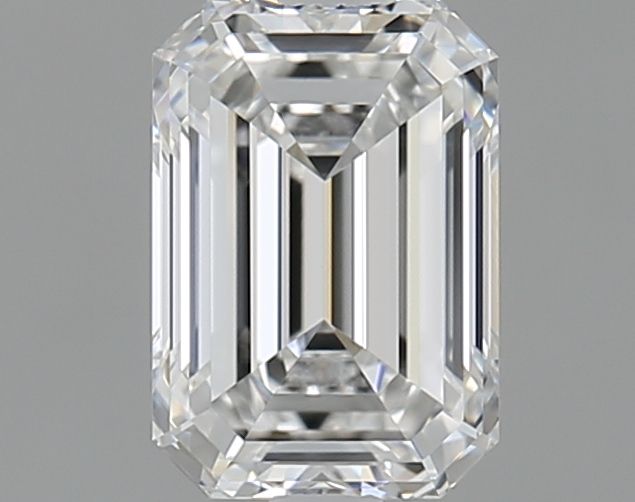
For step cuts (emerald and asscher), buy VS1 or better — those flat windows show every inclusion.
Carat
The unit of weight, not size. One carat = 200 milligrams. Two stones of the same carat can look meaningfully different in face-up size depending on cut depth and shape.
Two practical points:
- Magic numbers cost more. A 1.00 ct stone is priced 10–20 % higher than a 0.95 ct identical neighbor because of demand at round thresholds. If carat doesn’t matter to you, buying just under the magic numbers (0.90, 0.95, 1.40, 1.90) saves real money.
- Spread varies. A 1.0 ct oval looks ~10 % larger than a 1.0 ct round. A 1.0 ct marquise looks ~25 % larger. Cut shape matters more than carat for perceived size.
Browse diamond pieces
Frequently asked
More from the diamonds guides
Written by
Anna
Jeweler · Formi Jewelry
Anna works with Formi clients on stone selection, setting design, and fit — making sure every piece is right before it’s made.
Book a consultation with our in-house jewelersLast updated May 2026